Nike
Artemis — Product Readiness & Activation Platform
Role: Product Strategy, Platform Design, UX/UI Design, Design Leadership
—
Artemis is Nike’s centralized product readiness and activation platform, powering product launches across Digital, Retail, and Partner channels.
Over six years, I led its design evolution from concept through global rollout, replacing a fragmented legacy system and enabling scalable, consistent product activation across global markets.
Impact:
• 30+ hrs/week operational efficiencies
• 6+ global geographies adopted
• 160+ hrs manual effort addressed
• ~$30M inventory risk mitigated
Background
Every product experience across Nike.com, the Nike App, SNKRS, partner channels, and retail depends on a series of decisions around product readiness, availability, and activation.
Artemis sits at the center of this ecosystem, connecting product data, operational workflows, and launch execution into a single platform that powers product launches globally. While invisible to consumers, it plays a critical role in ensuring launches happen accurately, consistently, and at scale.
Challenge
As Nike’s commerce ecosystem expanded, product activation became increasingly difficult to scale. What began as a single-channel system evolved into a fragmented operational model spanning spreadsheets, disconnected tools, and manual workflows.
Key challenges:
- Fragmented tools, spreadsheets, and manual workflows
- Repetitive data entry and reconciliation across systems
- Inconsistent execution across regions and channels
- High operational risk and limited visibility
- Poor scalability for future growth
Create a centralized platform that simplifies product activation, standardizes global operations, and provides a scalable foundation for Nike’s growing commerce ecosystem.
Design Decisions
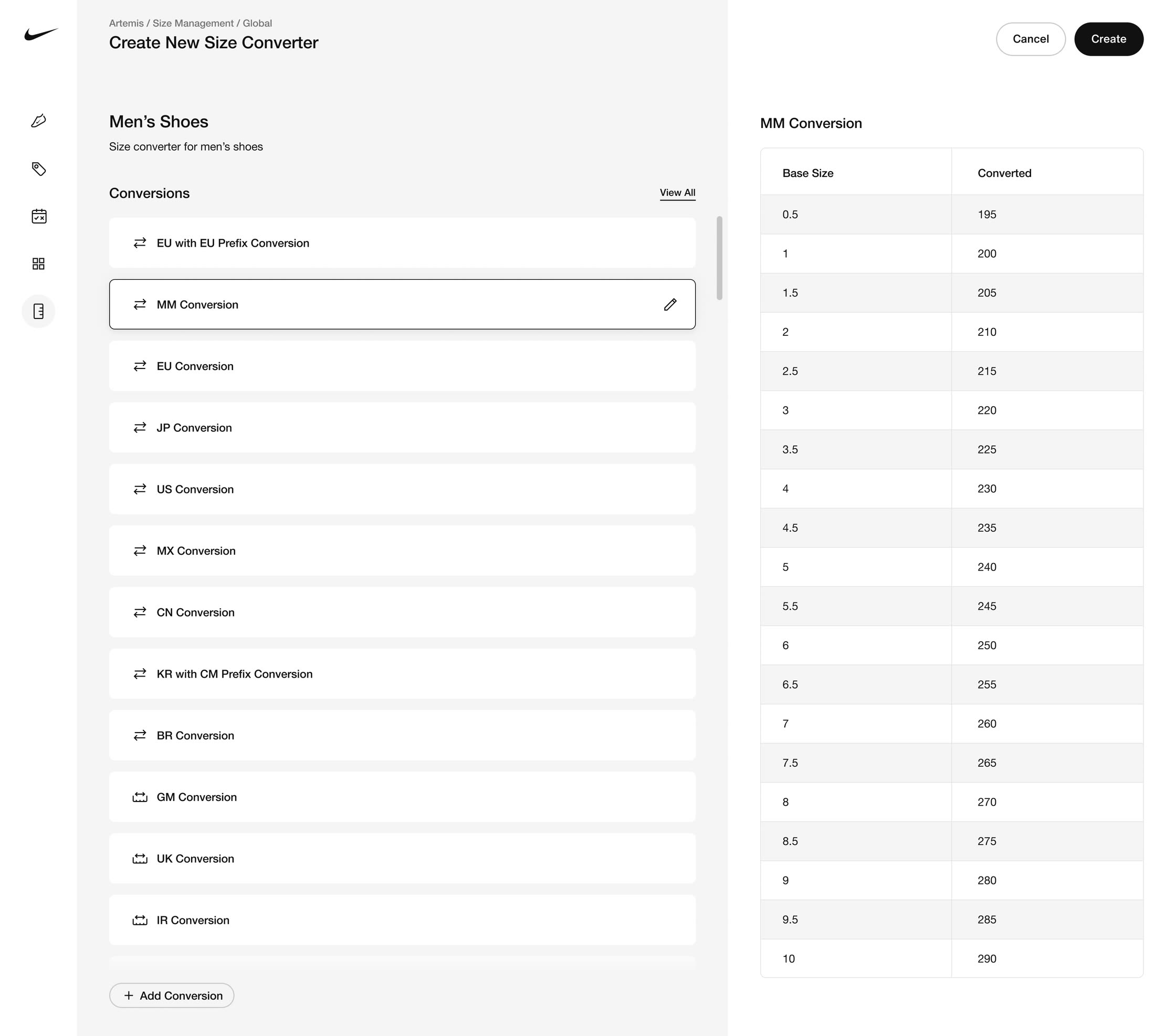
Centralize Product Activation
Unified fragmented workflows into a single source of truth.
Outcome = Improved visibility and consistency across global operations.
Design for Global Scale
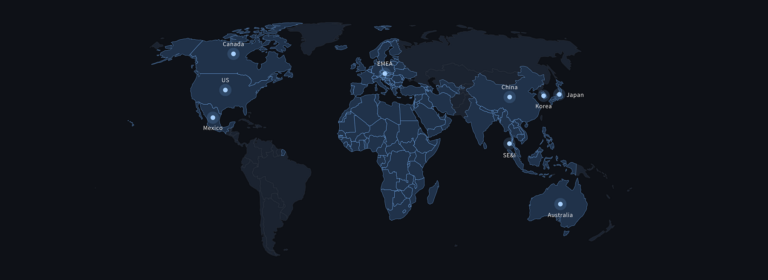
Created a shared model balancing global standards with regional flexibility.
Outcome = Enabled rollout across multiple geographies.
Embed Operational Intelligence
Integrated business rules and validation logic directly into the platform.
Outcome = Reduced manual coordination and increased launch confidence.
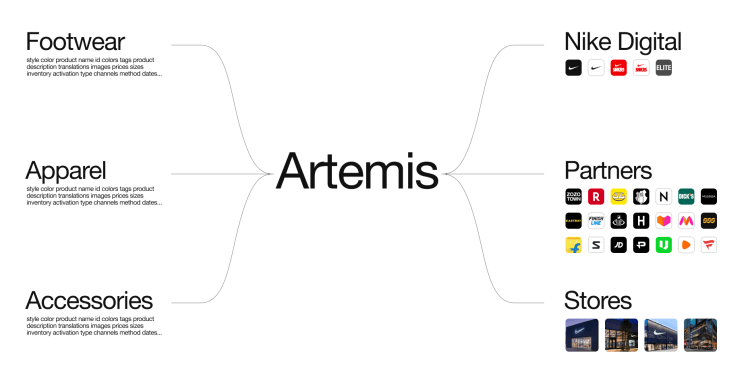
Align a Complex Commerce Ecosystem
Connected systems, workflows, and channels into a unified platform.
Outcome = Enabled scalable and consistent execution across global markets.
Outcome
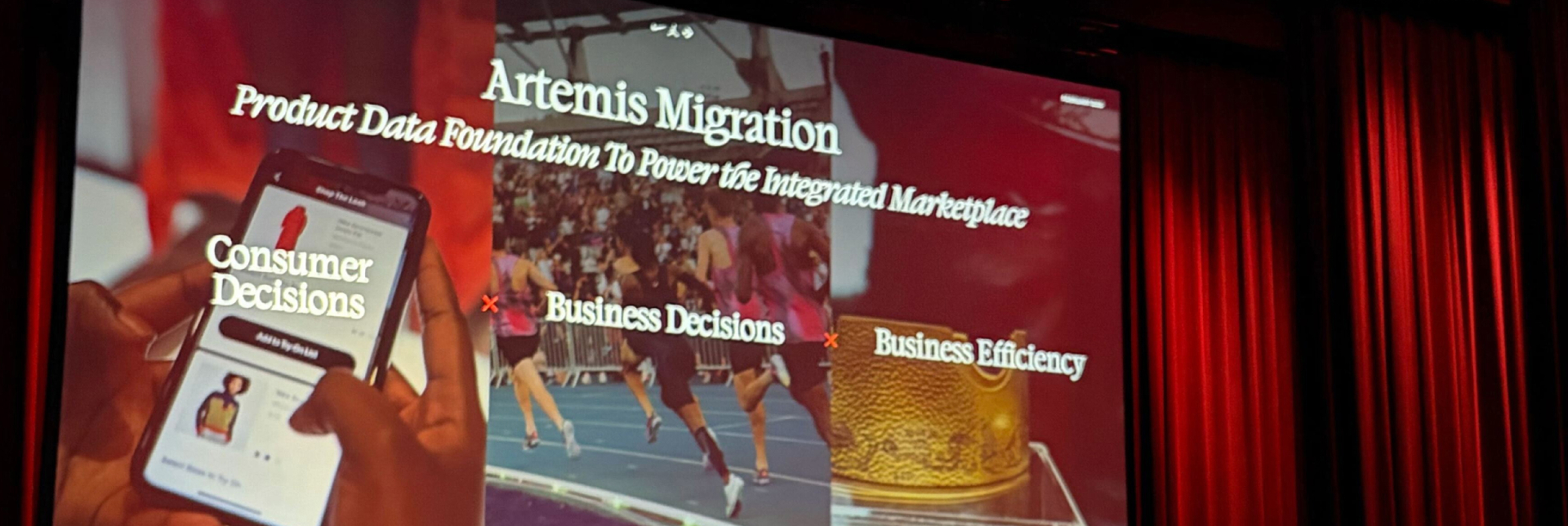
Artemis transformed how Nike manages product readiness and activation across its global commerce ecosystem. It replaced a fragmented legacy system and enabled a centralized, scalable foundation for global product launches.
Global Rollout
🇰🇷 Korea 🇦🇺 Australia 🇺🇸 United States 🇯🇵 Japan
🇲🇽 Mexico 🇪🇺 EMEA 🇸🇬 SEA&I 🇨🇳 China
System & Business Impact
• Replaced legacy activation system
• Standardized global workflows
• Improved launch visibility and confidence
• Reduced manual operational overhead
• Established foundation for automation and AI
30+ hrs/week
Operational efficiencies
160+ hrs
Manual effort addressed
$30M
Inventory risk mitigated
8 Geographies
Platform migration & Global adoption
Design Process
As the UX Design Lead, I partnered with Product & Engineering to drive the design strategy, championed the value of user-centered approach by spearheading the UX process and introduced the methodology of Design Sprint.
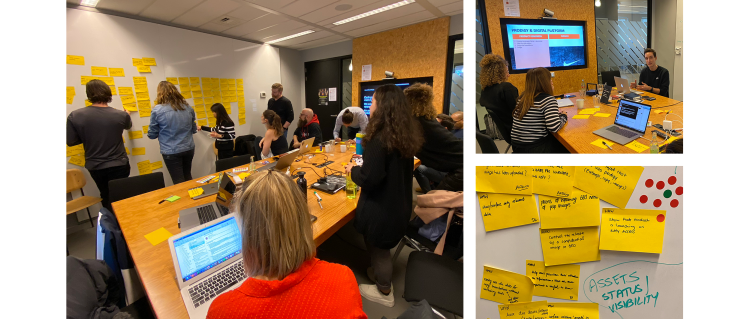
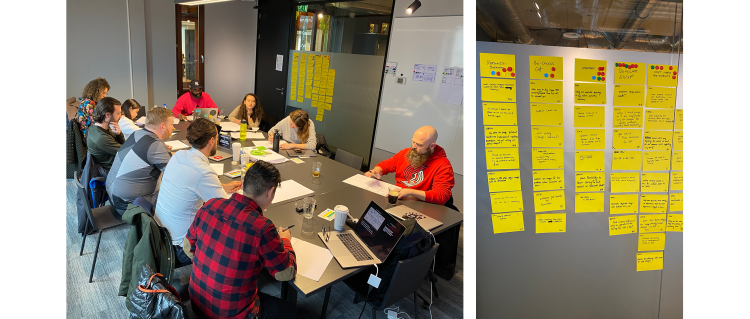
We had very little knowledge and understanding of this complex space of product setup and to help expand our understanding of the problem space, the users, their needs, use cases, as well as the tools and technology that they’re using today, I drove the process of organizing and running multiple Design Sprints with our stakeholders at Nike WHQ and our EMEA partners at Nike EHQ to help bring teams together, build the right relationships, foster collaboration and work towards a shared vision.
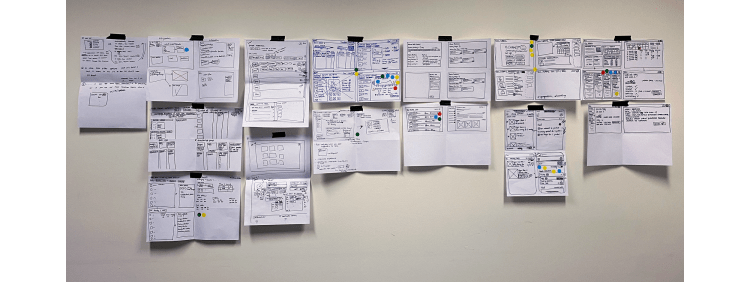
User-Centered Approach
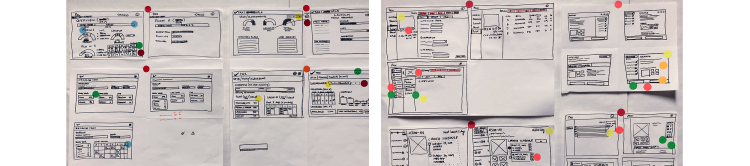
This new design process has energized our business partners across Global & Geos, the collaboration with our partners has brought forth ideas that traditional interview and brainstorming processes do not. With all the ideas generated by the team, and after the multiple rounds of sketching sessions, each team member present their solution sketches to the group and discuss the various features of the concept. Once we voted and decided on the direction, I began building the prototype, partnered with the product manager to create a research plan: user scenarios, tasks and our test questions.
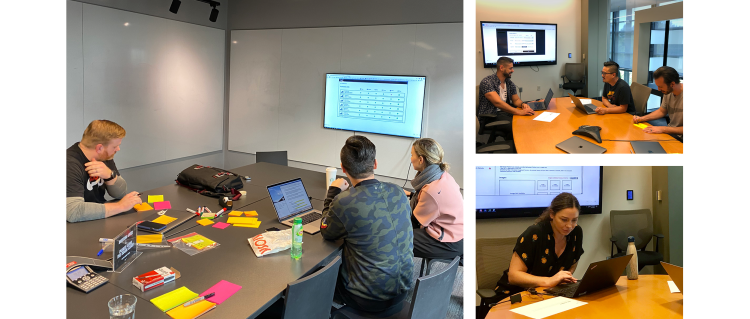
User Testing
We tested multiple concepts with over 20 users (Global and Geos Ops in variety of roles) to learn and see how they interact with our ideas.
Over 10 rounds of usability testing, gradually moving from low-fidelity to high-fidelity prototyping, refining and iterating the design each testing round; validating and learning on two levels by listening to what users say and observing what they do which has provided us with insights to help us measure and align our user’s mental model with the mental model of the design, identify what works and what doesn’t.
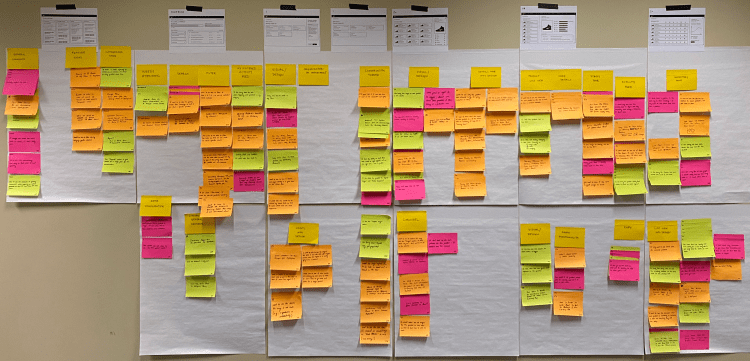
Analysis & Synthesis
The notes and feedback gathered from our testing sessions were then mapped to reveal patterns, create hierarchies, identify themes and connections that helped validate our ideas ad understand what is most important from a large volumes of data, which has informed our design direction, focused our strategy and discussion from the perspective of our users, and not the perspective of our assumptions.
Single source of truth for Planning and Activation. Users can plan their assortments, set channels, select experiences and plan asset creation at a granular level and have visibility into readiness at an experience level.
Deeper Insights
The learnings and insights gathered have informed our design direction for Global Tagging & Geo Activation which are only parts of the product setup process. There were additional insights gathered by a separate work stream that dealt with the upfront process, it was clear that Nike needs a simple way to plan an assortment that can be tracked all the way to activation.
It was clear that we needed one platform; by having the Planning function together with Tagging and Activation in a shared ecosystem and part of the Omnichannel Product Platform, Global and Geo ops teams can seamlessly publish products on consumer experiences, increase operational efficiencies and lay the foundation for future automation and workflow.
Artemis
A suite of tools to enable Global and Geo Ops to plan, manage and scale product delivery that powers all consumer-facing channel experiences.
Solution
Artemis is a platform that’s critical in powering the next generation of Nike’s consumer experiences which drives Nike’s PDP experiences in .com, App, SNKRS, NTC, NRC. Optimized for three different phases; a continuous flow of product set up that happens within a season.
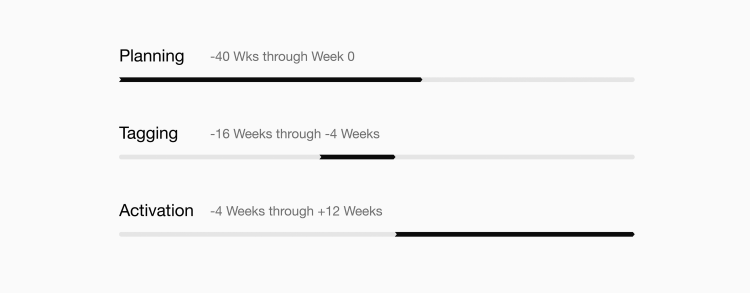
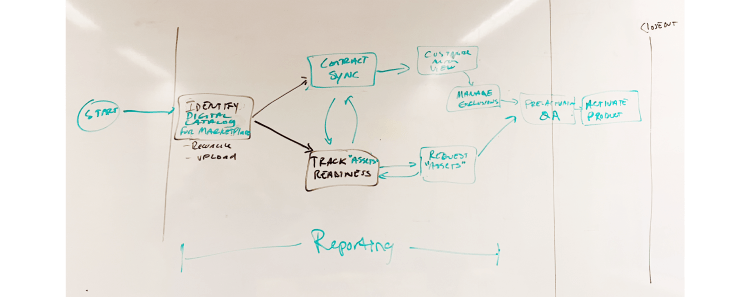
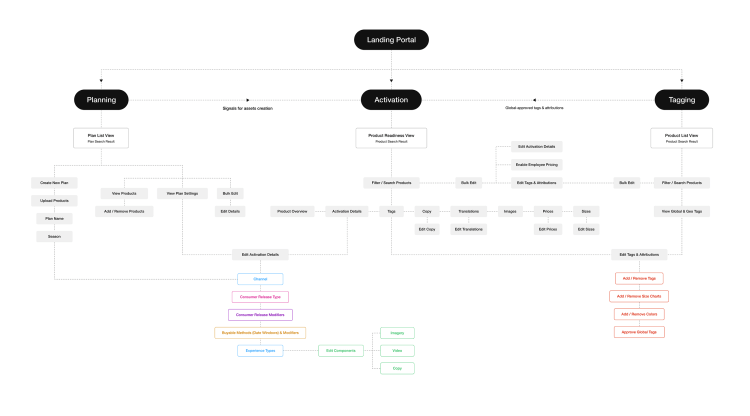
Flow Map
Designing for the three different workflows within this ecosystem, we needed to take a wider view to establish an overarching UX, a seamless experience in getting products ready for our consumers through mass quantity of products as well as a single product that’s simple, intuitive and familiar to our users.
This flow map is key to not only identify the core components and the optimized views for the different workflows but also to visualize the interaction flow, the flow of data, how both Planning & Tagging feed into Activation, with critical shared functionalities to provide a seamless experience and accommodate different use cases within Artemis.
This also helped brought our cross-functional teams together and establish a common ground on what we’re building.
Design Exploration
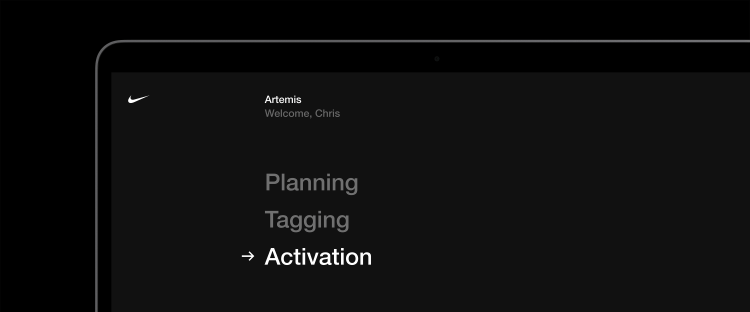
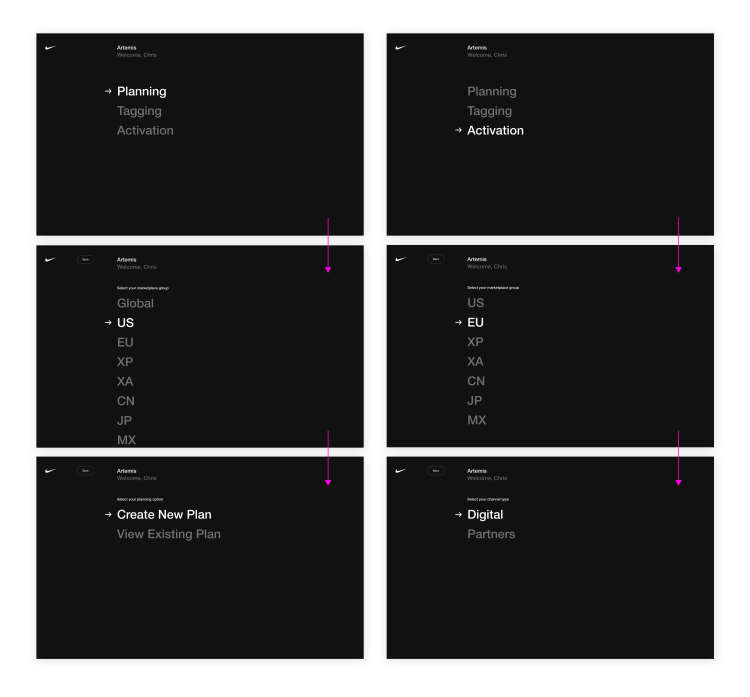
This is where I started collaborating and partnering with the Senior Creative Director for Retail & Capabilities on a new component library and visual language for Nike’s internal tools across Commerce, Marketing Technology and Retail. I explored this concept of a landing portal where user is greeted upon logging in, arrived at a dedicated screen of workflow options that feels premium, visually expressed in large and easy to use UI with clear interaction expectations.
This concept design is a big unlock for us as a team, it has helped define the visual & UX direction on how tools should work in our Capabilities space as well as the Retail apps.
Artemis: Planning
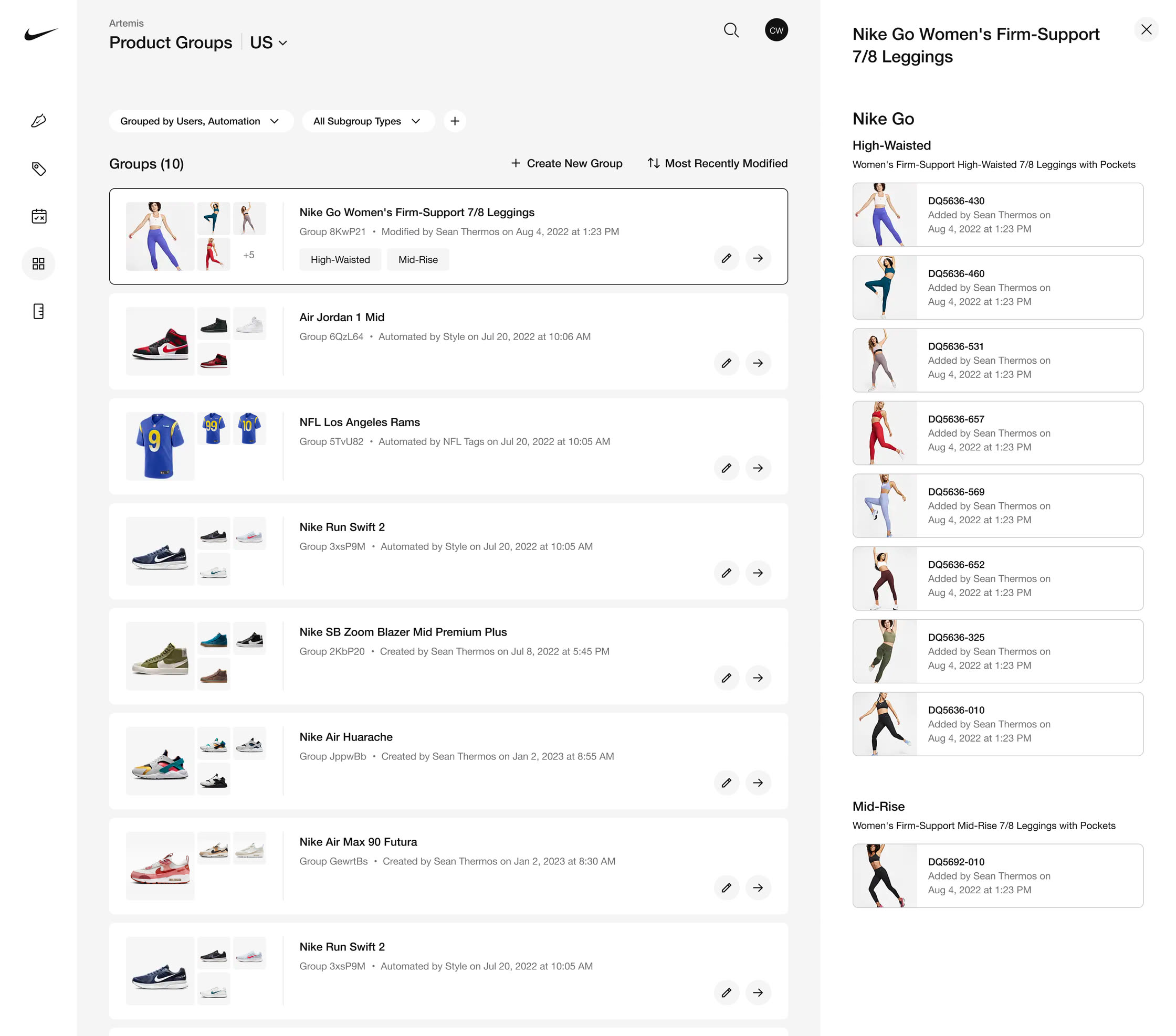
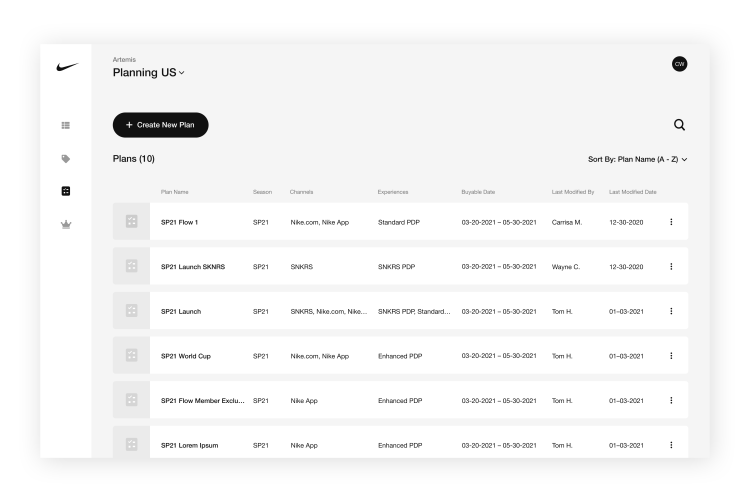
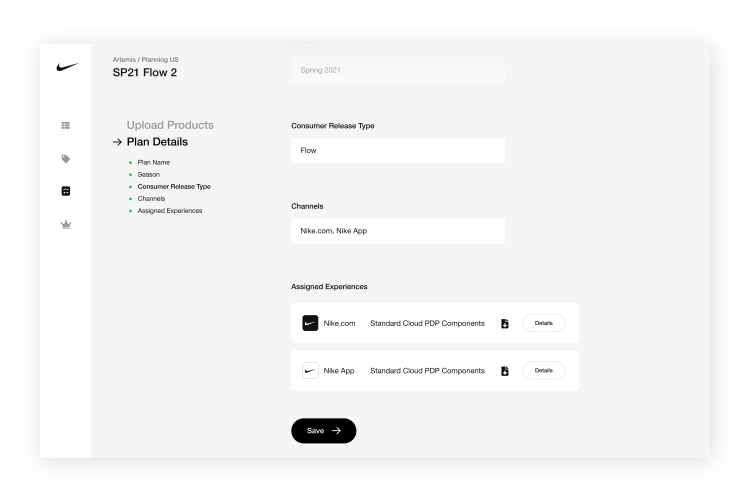
In the planning phase, the Geos create a consumer journey for one or many products across channels and experiences. This plan is a grouping mechanism that fuel PDP asset creation and help Activation teams know what to expect. It’s the ordering and tracking of components that needed to be completed for the products to go live successfully. In Artemis, users are able to track that across all the way through the Activation process.
Artemis: Tagging
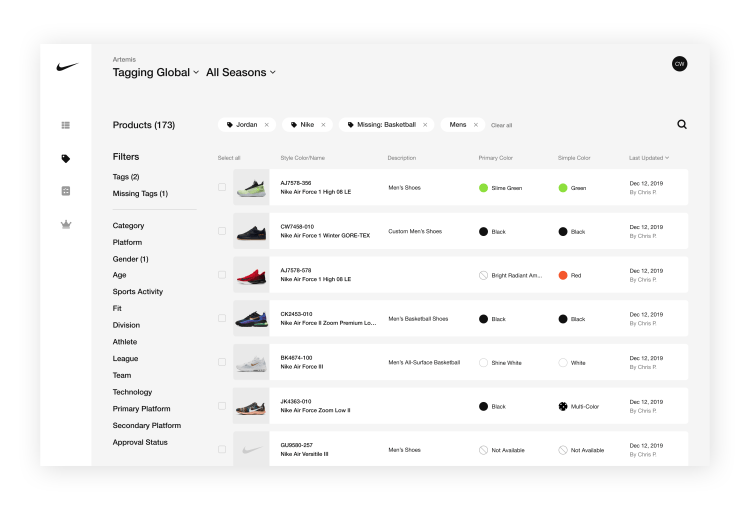
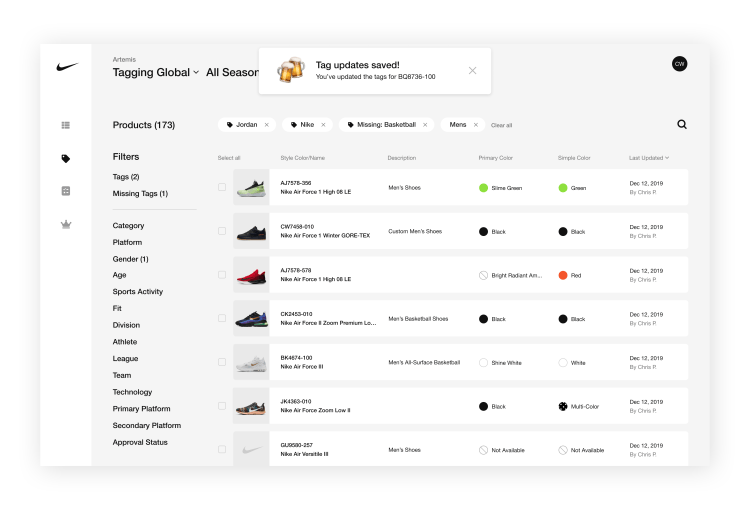
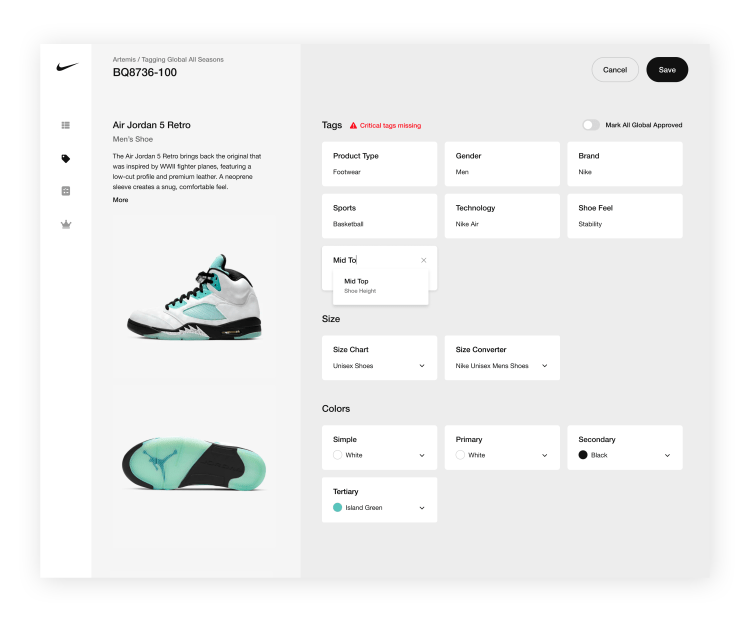
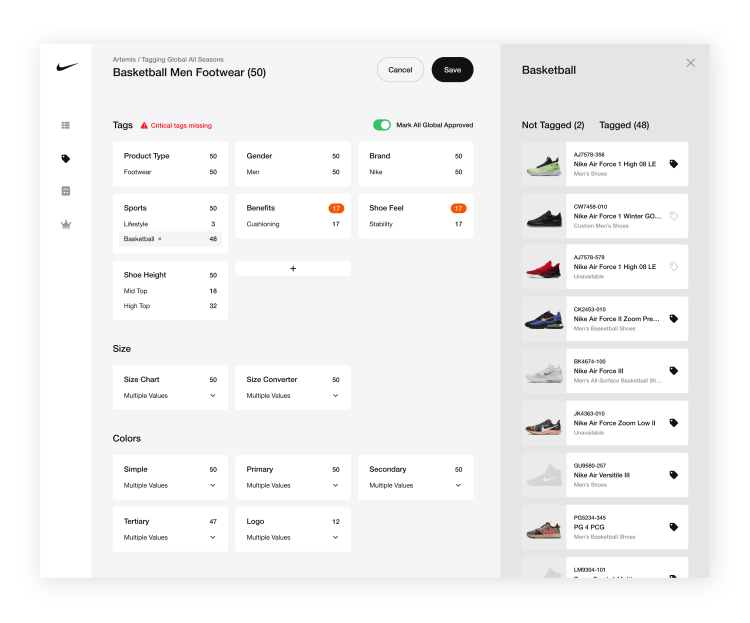
Tagging enables our seasonal product attribution & validation process by our Global Ops team to power consumer discovery.
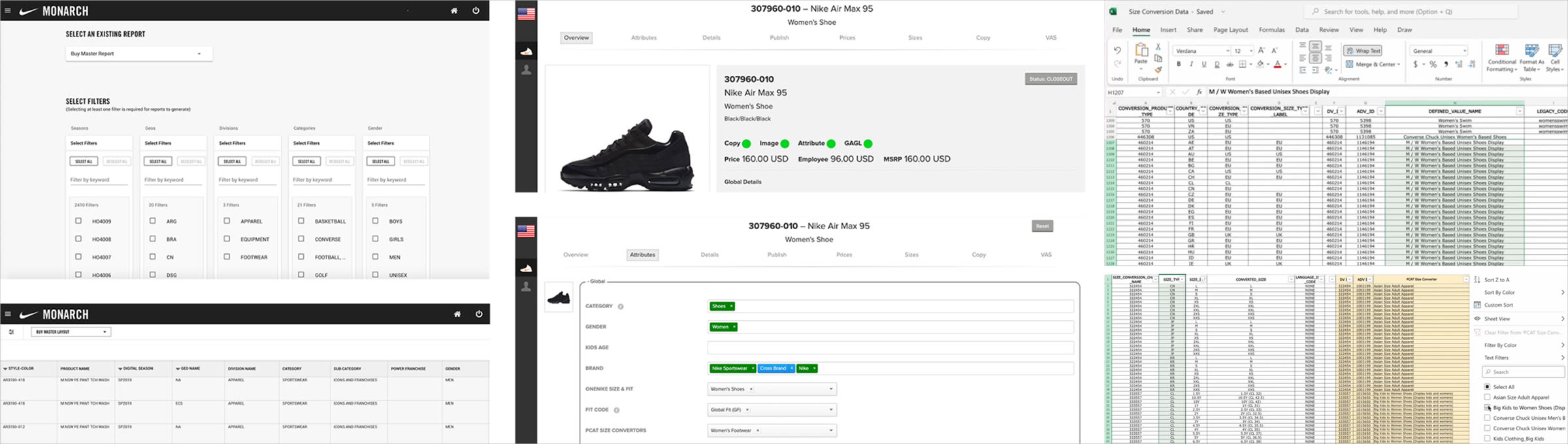
Pre Artemis, the users workflow was a combination of spreadsheets in Excel and Prodigy (legacy system) to search/ filter for products and perform the tasks of editing, validating and approving attributes.
Today, users (Tech Producers) can do their job all in one tool. This is a big unlock in improving their processes and streamlining their workflows as we leveraged more automation, approximately 95% of attribute tags are now automated (1,800 tags by mapping data from the legacy system to Artemis) and reduced the manual copy/paste data entry into spreadsheets. Through an iterative approach, we’ve designed an experience that provides our users the flexibility to search and filter by Seasons, Data Points or Consumer Tags and display the filter result in a way that meets users expectations and needs.
Artemis: Activation
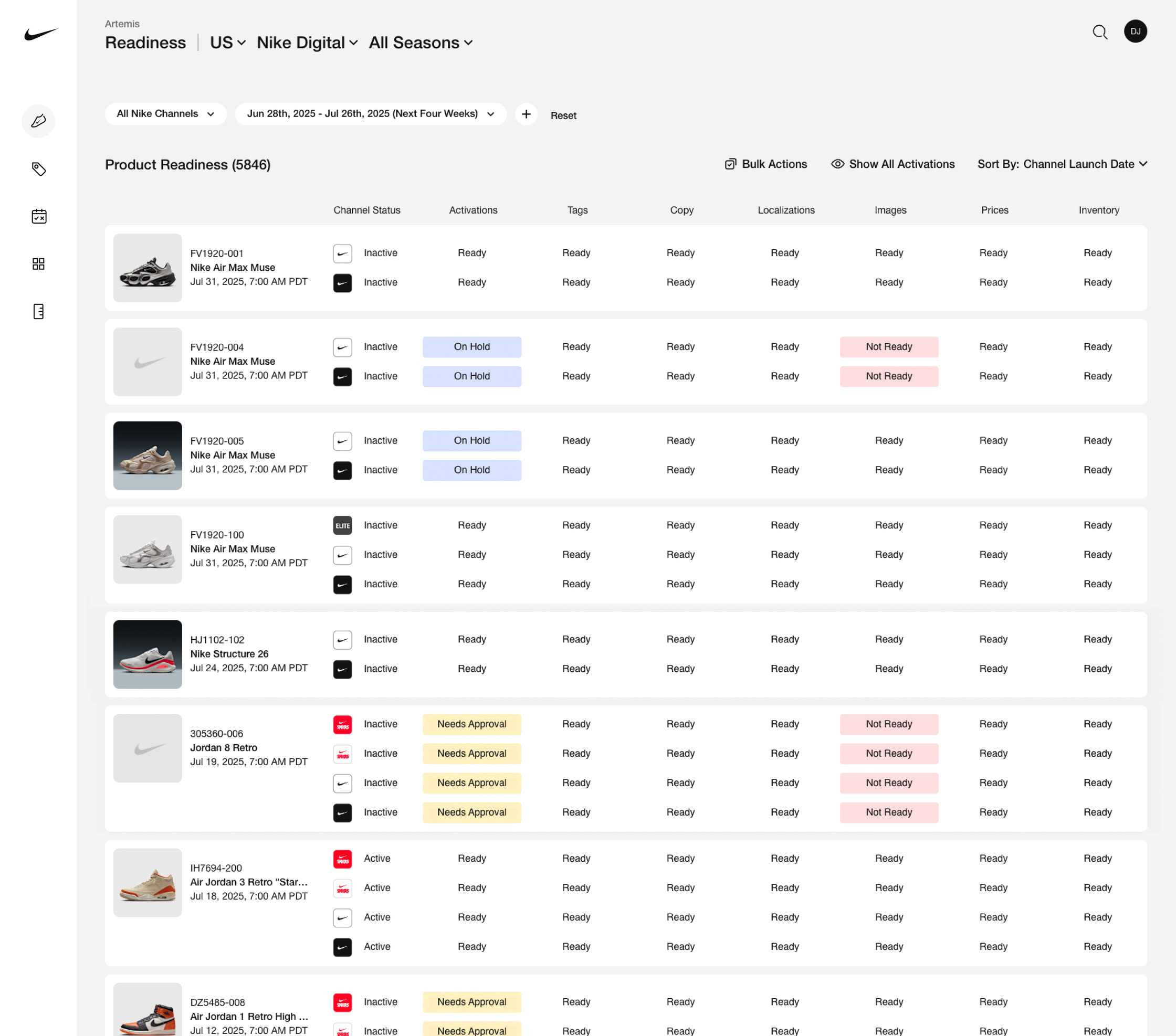
During Activation, Geos are managing the Activation of products within that plan to ensure products are ready. They facilitate the automatic connection to PDP asset and inventory ‘readiness’ against the planned consumer journey. The Plan sets how products are going to be activated in a season. In Artemis, users are able to track that across, all the way through the Activation process.
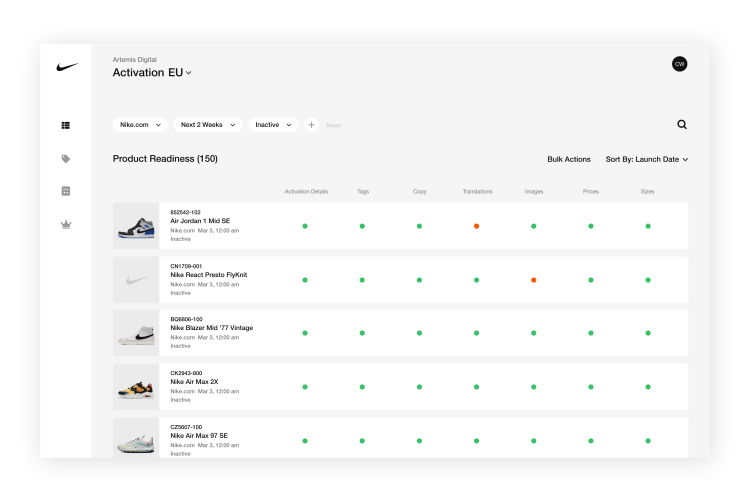
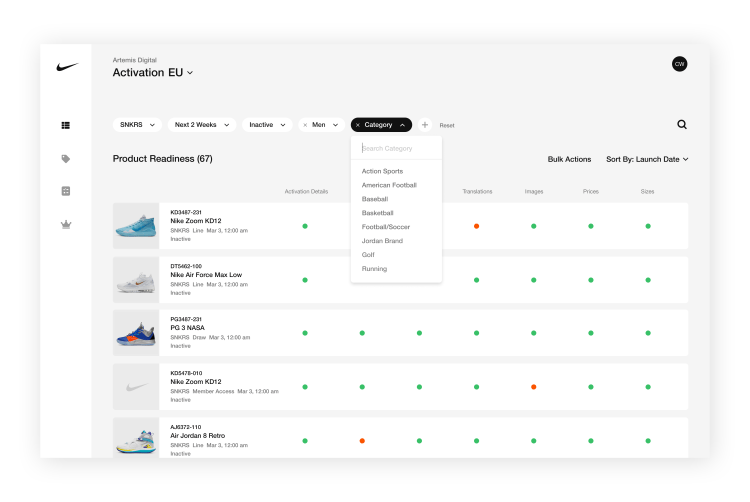
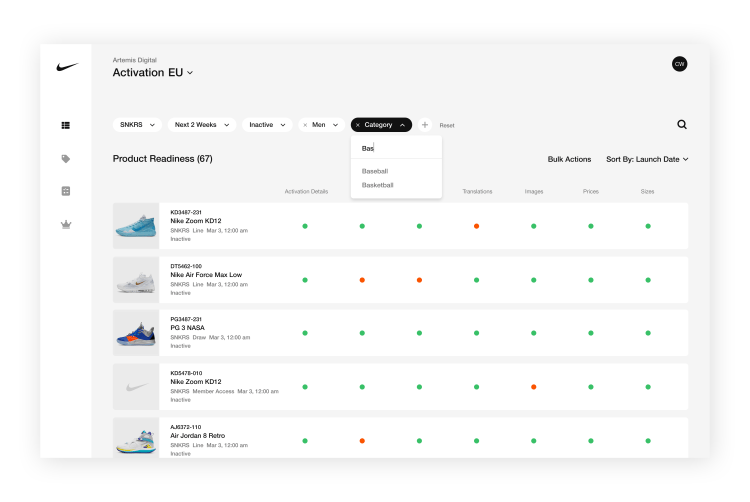
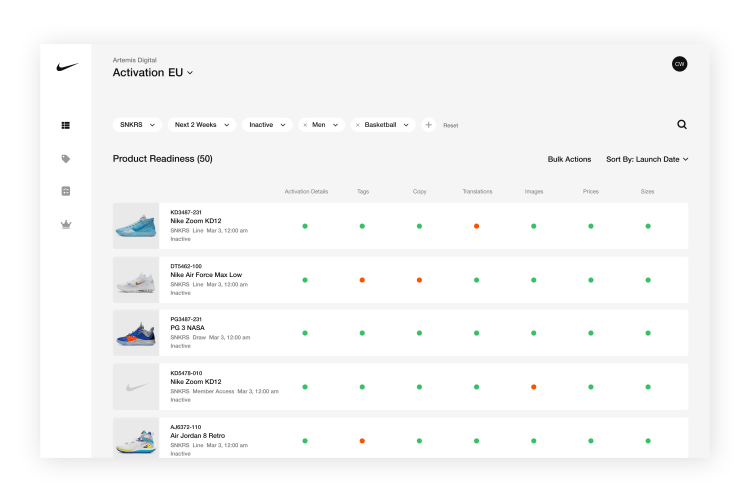
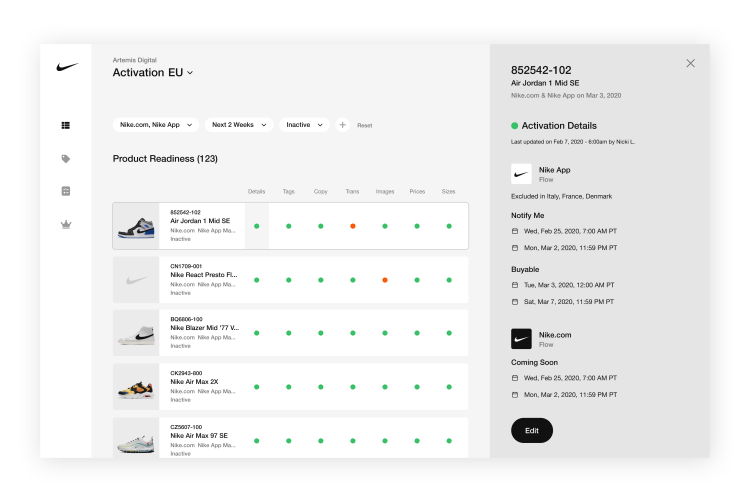
This optimized view of product readiness offers a snapshot of critical information, quick access and visibility to asset readiness, a key insight we learnt from our test sessions, users love the ability to quickly scan and use the green & red lights to track asset readiness and launch health.
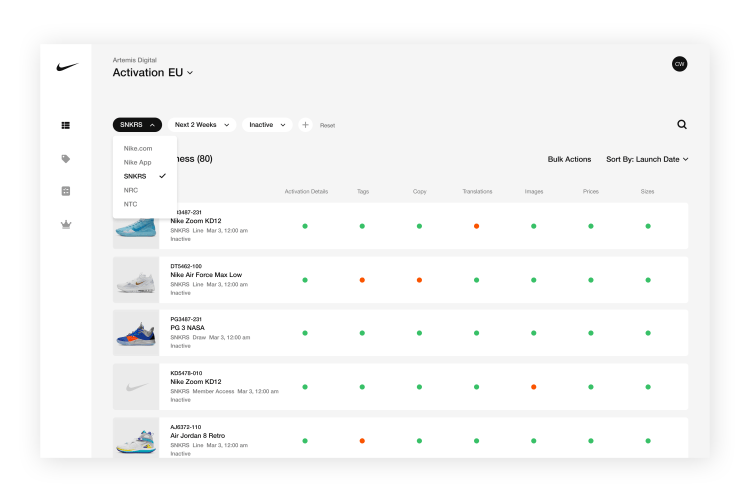
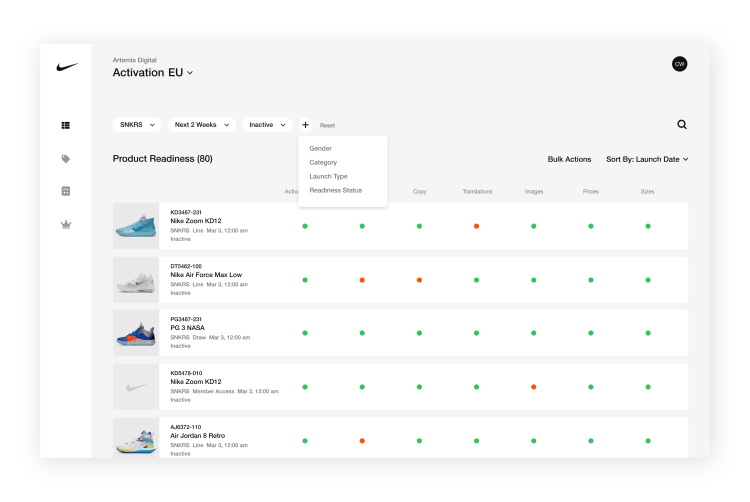
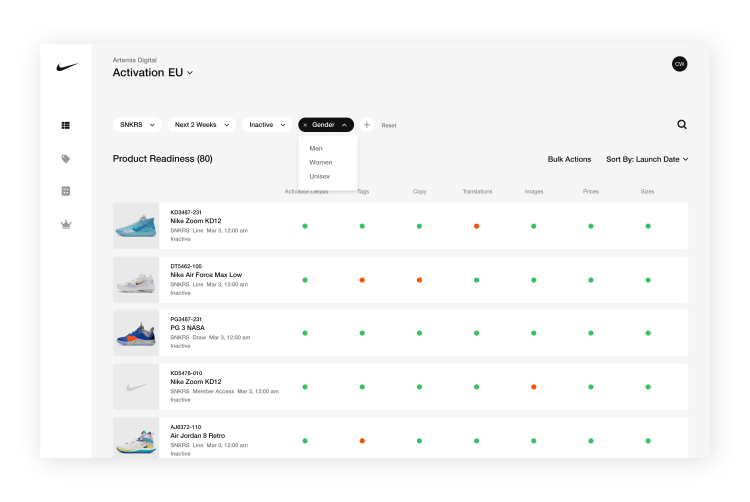
It also provides users with a more prominent filtering options at the top of the page. The learnings from our test sessions (related to how users select filters and the required filtering logic) really shows that having these default filters to begin with are very useful and helpful for our users. Users also have the flexibility to add additional filter types to accommodate their specific needs.
Quick Access
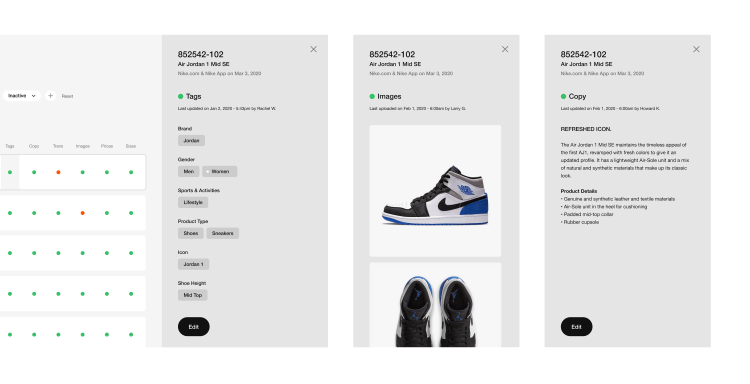
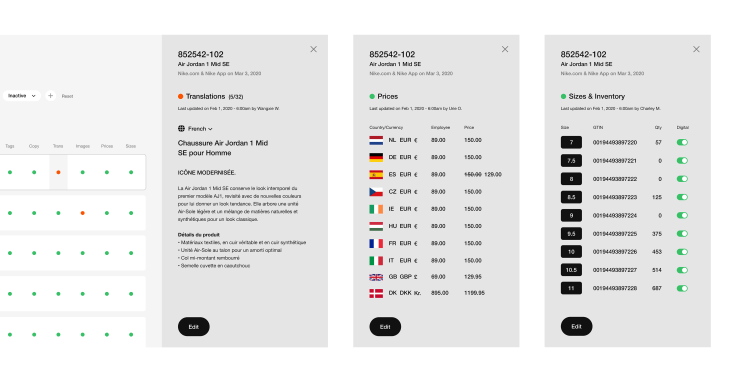
Coupled with the easy access to drill into the different type of assets or details from the side panel instead of taking users to a new page or modal.
Critical Data
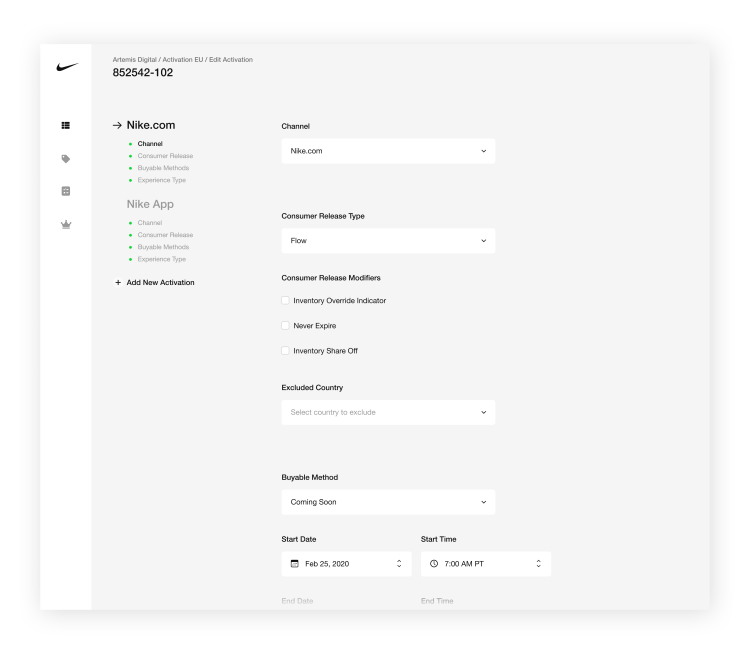
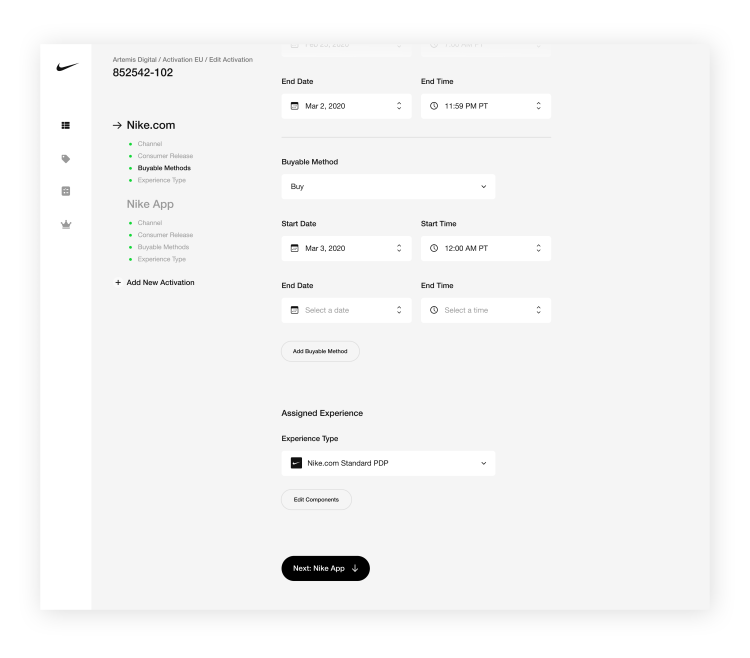
Data accessibility and clarity of information are major insights from our test sessions, users have an all-in-one view of the Activation Details to give a quick snapshot of the product lifecycle and visibility to critical data such as Consumer Release Type, Channel, Buyable Methods, Excluded Countries, Dates and Time.
Current process to get these key data, users would have to jump through multiple different sources and tools. This tremendously help simplify & streamline their workflow which equates to reducing risk and costs. In addition, users love having the ability to set and edit these data in one place!
This Edit functionality is shared between Planning & Activation, to create a seamless interaction between the 2 workflows and provide flexibility to accommodate all the different use cases, where users can add Activations or make changes to existing Activations.
Geo-Specific Experience Planning
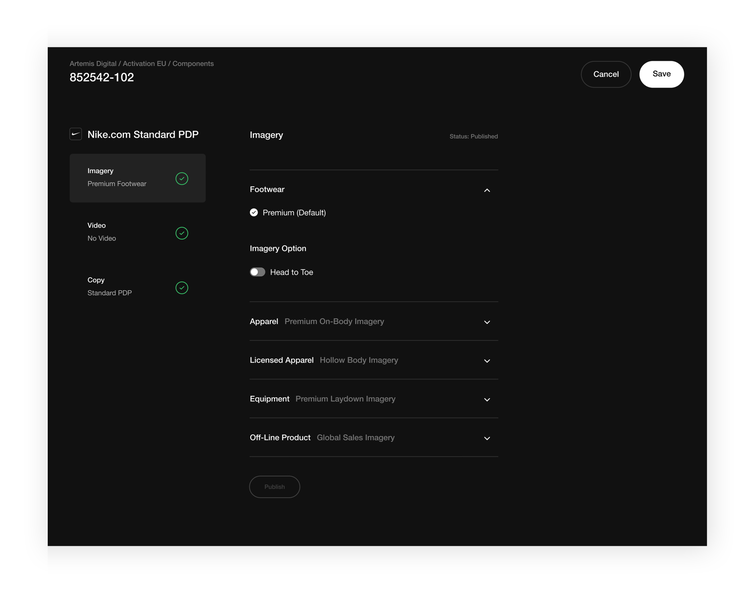
In cases where users need to create a customized experience at the component-level, the ‘Edit Components’ button will take users to this screen to specify and customize an experience at a more granular level.
This is a big part of unlocking the ‘Geo-Specific Experience Planning’. Ex. Some Geos may want to request ‘Dual Gender & Body Diversity’ imagery, this allows them to deviate from the defaults experience and component configurations. In addition, this will bring us a step closer to personalized consumer experiences, leveraging dynamic components that display the most relevant content based on User Shopping and Browse History, Market, etc.
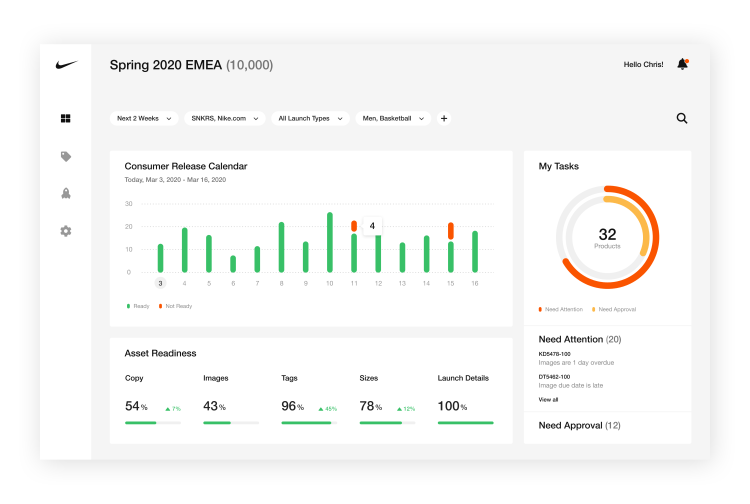
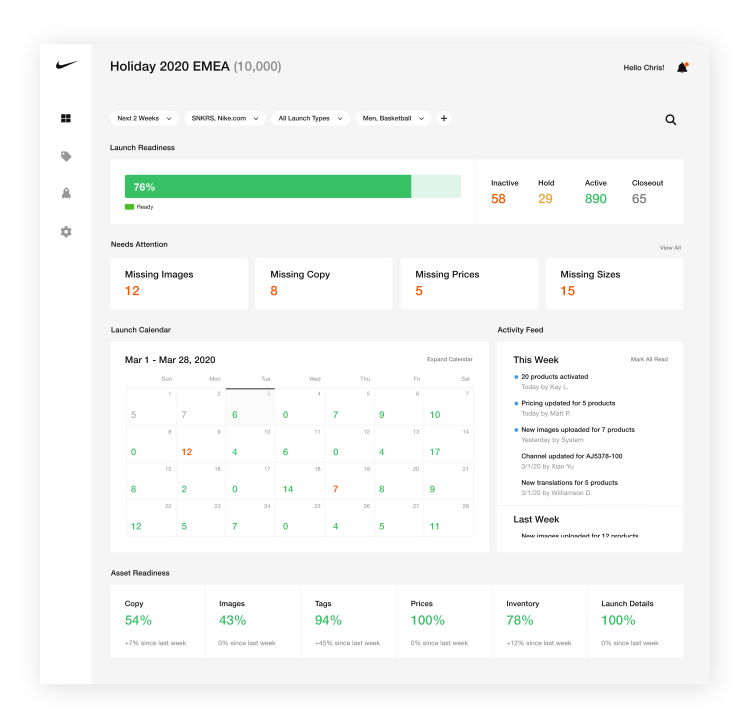
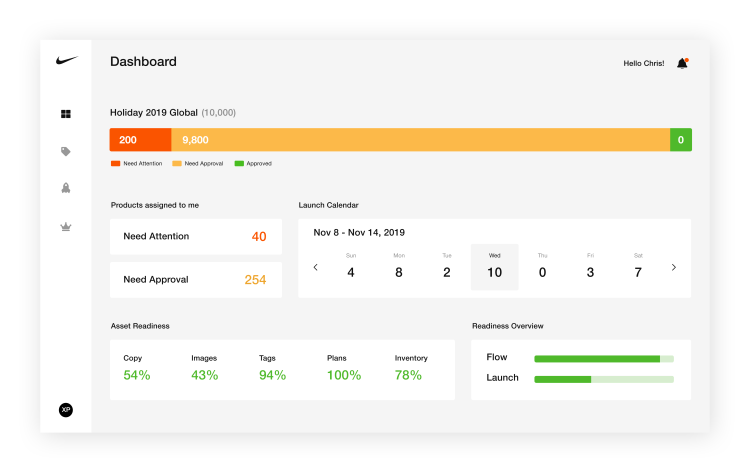
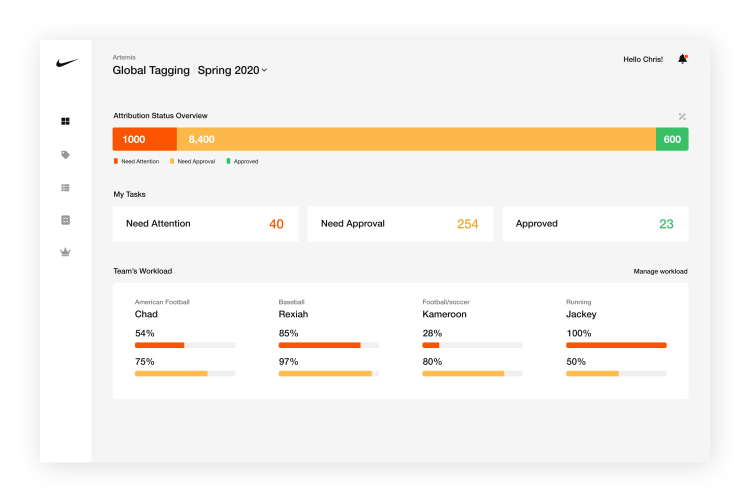
Artemis Polaris — Operational Dashboard
Dashboard and data visual explorations for Nike Capabilities that offer a snapshot of critical information such as product status & asset readiness to provide a quick view on the launch readiness of products and to track the progress.
Future-state direction, a north star design as we leverage more automation and allows users to start managing by exception, products that need to be resolved and require human intervention when automation is unable to complete on its own.
Ex. When assets are overdue or if an escalated request is needed, those products will be in ‘Need Attention’.
Up Next
Ruby / Receptionists Operating System

—
Website design and content © 2026 Devy Jamin. devyjamin@gmail.com